![]()
![]()
![]()
![]()
![]()
![]()
![]()
![]()
![]()
![]()
![]()
The Longueville house continues a line of thinking we have been pursuing in our office for sometime now regarding the experience of space. We are interested in the movement through and the experience of spatial environments both internally and externally. We enjoy blurred boundaries and ambiguous situations and like to create architectural space that is neither interior nor exterior.
This house is also a direct engagement with the issues of heritage and conservation, that have become central to the design process especially in Sydney, either by choice or force.
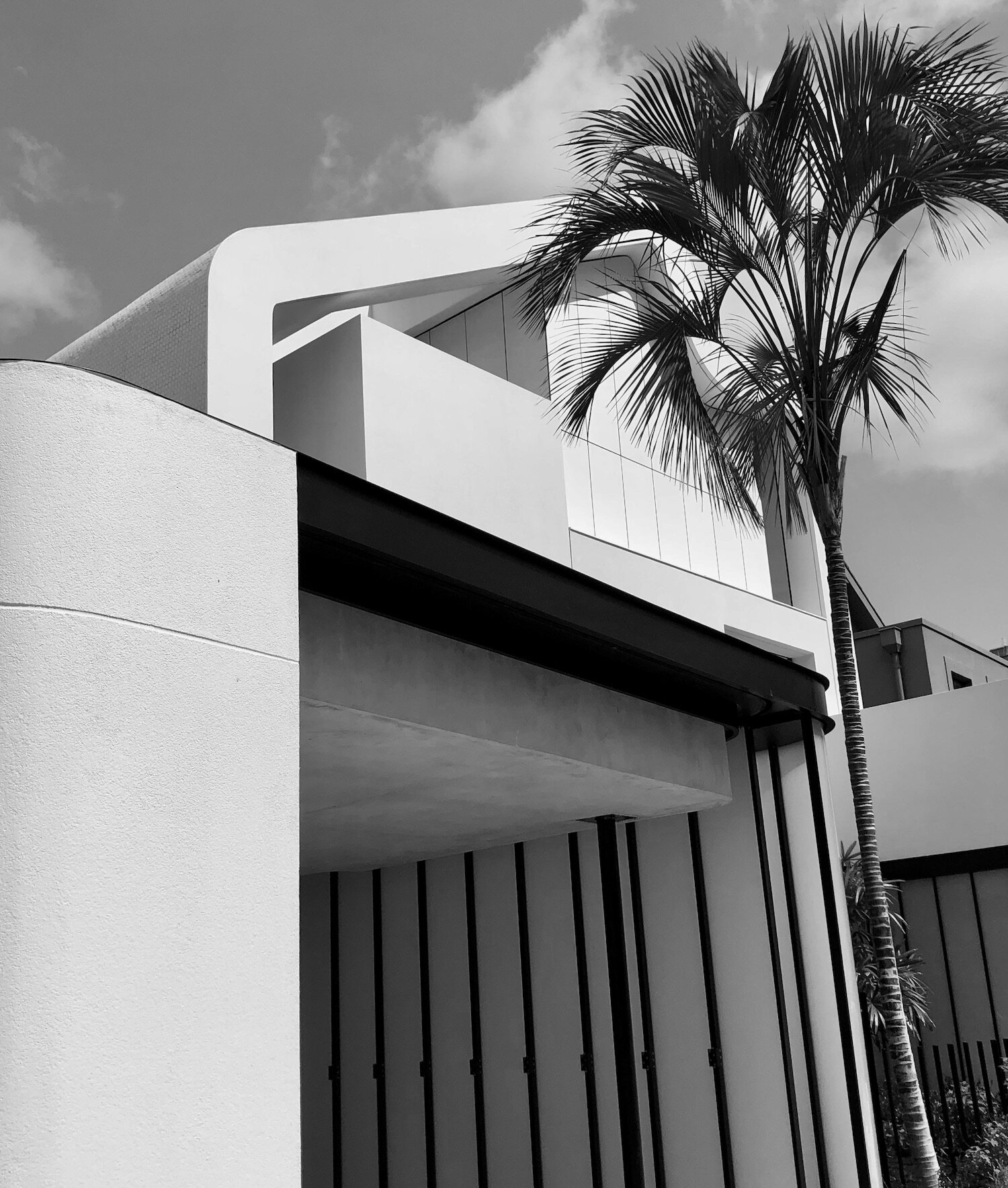
The experience of this house is a journey from the apparent single storey timber weatherboard cottage as seen from the street, into a very modernist two-storey house beyond.
Our philosophy was to retain and reinforce the period appearance and feel of the existing cottage and gradually break it down integrating it into the modern. One passes through the heritage facade, beyond the front two rooms, and into a courtyard space that is transitional.
One stands in what was the living rooms of the old house but they are flooded or planted out. The remnants of roof framing and fireplaces are present and one can walk into the old side verandah kept with it’s timber posts and wrought iron railing.
From here we move into the glass, steel and concrete boxes of the new. This is also the point where the decision is made to move up, down or sideways to bedrooms, tv room, garage or living areas. The tv room to the left frames the sandstone fireplace and chimney retained from the old kitchen and laundry.
We move forward and down into the main space that opens out to connect to the garden and pool area. The interior has moved from defined spaces to an undefined zone where space moves in all directions. Glass doors slide away to remove a wall and separation to the outside, a double height space takes you up to a gallery level and roof light, a central outdoor space is visible beyond the kitchen area that draws you forward and a strange rampway moves to a hidden space to the right.
The material choice and detailing strategy is a direct response to the philosophy and methodology described above.
The strategy and principle adopted for this house was one of reuse and recycle. Structure was retained, timbers, bricks etc were reused. The planning is adopting passive solar principles with the rear wing and central courtyards opening up to the north to allow maximum internal solar access. Good cross ventilation. External covered living areas were provided. All windows were provided with shading or provision for shading. All rainwater is harvesting and stored for re-use.
The project was cost effective in its choice of materials and in it’s planning. Materials were sourced for cost effectiveness while maintaining design intent. Budget sums were allocated to parts of the design on a prioritised and value added basis.